
Homelab
“Venturing down the rabbit hole is not about finding the answers; it’s about embracing the unknown, where curiosity leads and wonder unfolds and time flies.” – Average Homelabber
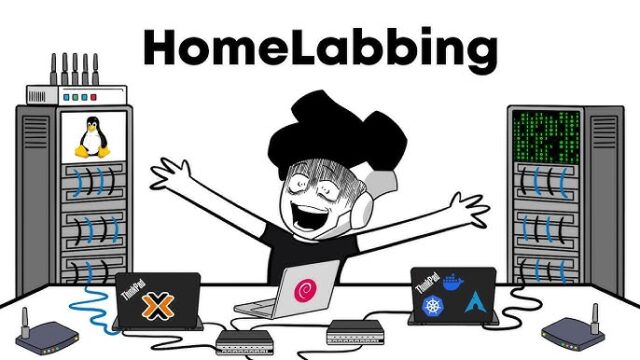

What is Homelab ?
While the formal definition describes a homelab as a “personal array of computer servers and networking gear for home-based learning and experimentation in areas like virtualization and system administration” – wiki
I see it differently. For me, homelabbing is like creating a digital homestead. It’s about self-reliance in the tech world: you assemble the hardware, you control the software and your data, and you nurture its growth. This not only allows for deep learning and customization but also helps save money that would otherwise go to big cloud companies.
How I started my Homelab
My homelab journey began in 2019, when my friend bought a Raspberry Pi and I acquired a NUC, both for tinkering with Linux.
What started as simple experimentation rapidly escalated. I soon progressed to deploying multiple self-hosted applications, integrating new servers, building dedicated NAS storage, and even creating a SteamOS server.
Now, in 2025, I manage a substantial setup comprising 4 bare-metal servers, 6 cloud virtual machines, and dozens of self-hosted services, and it continues to expand each year.


But, Why I am making Blog ?
During my journey to build homelab, I found plenty of tutorials on installing self-hosted applications, but a real lack of content on their everyday utility. The existing resources often come from IT admins or linux experts with impressive, high-end setups, usually centered on enterprise software or professional development.
This blog is different. It’s for the everyday homelabber facing common constraints. I’ll be focusing on:
Practical Application: How I use my homelab to solve real-life problems.
Resourceful Homelabbing: Building and growing a homelab on a limited budget, with modest hardware, and in after office time.
Informed Decisions: Comparing applications, explaining my choices, and weighing self-hosting against cloud alternatives. Not every solution and tech-stack needs to be highly available, scalable for millions.